
Free Arc Raiders Cheats — Anybrain Catches Them in Hours, Then Lumma Empties Your Steam
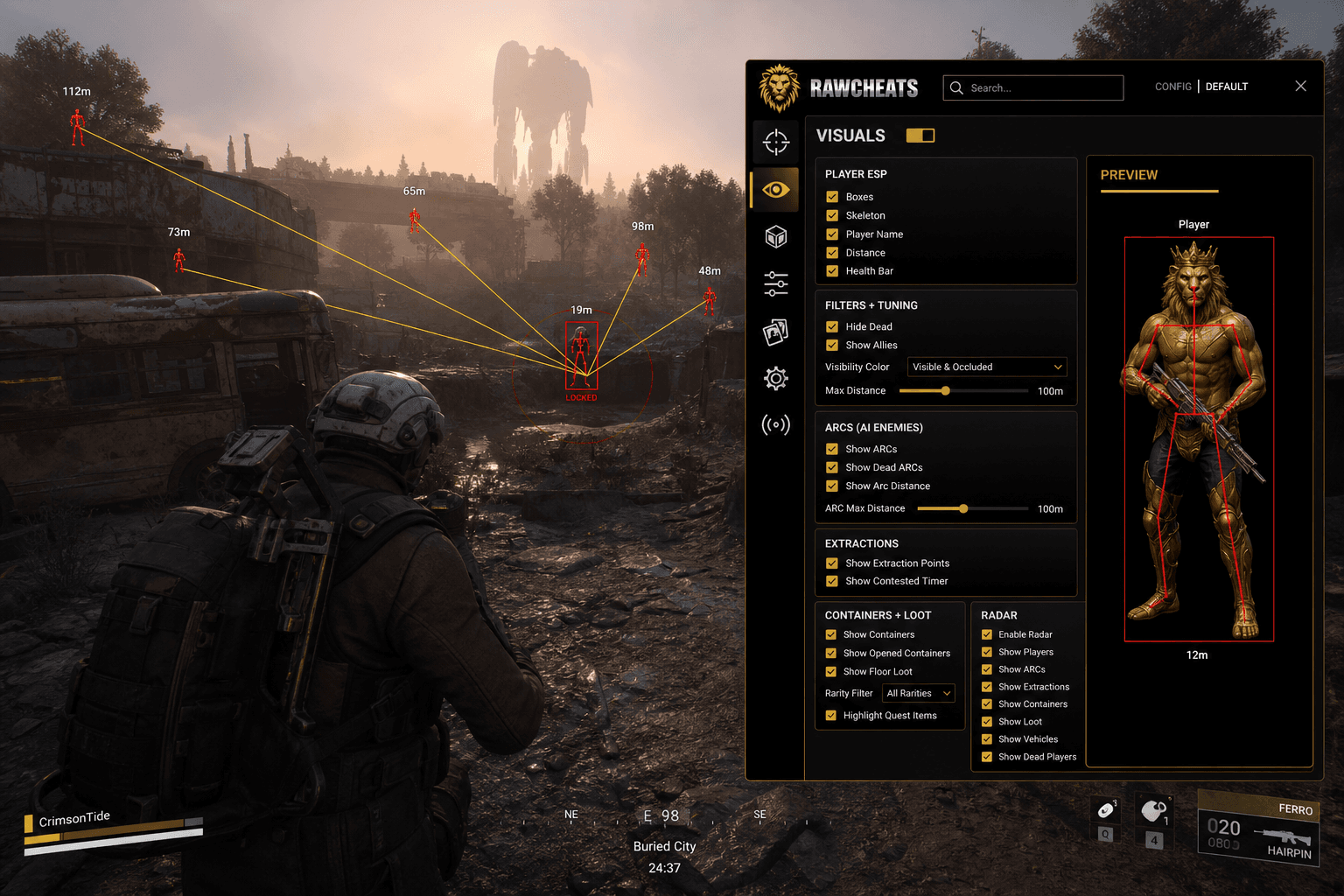
The free-Arc-Raiders-cheat ecosystem is concentrated on GitHub and Discord. Detection windows are measured in hours, malware payloads liquidate Steam libraries.
Search "free Arc Raiders cheat 2026" on GitHub and you'll find roughly 20 fresh accounts with VirusTotal-flagged Windows binaries, each promising "undetected" status and "no malware." Acronis's Threat Research Unit documented this exact distribution pattern for fake game cheats on GitHub and Reddit: the binaries are infostealers, the cheat functionality is nonexistent or minimal, and the actual payload is Vidar 2.0 / Lumma / StealC / RedLine families exfiltrating Steam tokens, Discord tokens, browser password vaults, and crypto wallets. Combined with Arc Raiders' one-strike permaban policy and the cross-EAC ban cascade, a single free-cheat infection produces expected losses 10-100x larger than a year of paid premium-tier subscription. The free-cheat ecosystem on Arc Raiders is smaller than on Fortnite or Rust because the game is newer, but the malware-payload pattern is identical and the consequences are worse.
This post is a cluster of the Arc Raiders Cheats Complete 2026 Guide pillar. The pillar covers the broader market context; this cluster goes deep on the free-cheat trap specifically.
The distribution channels — where the free Arc Raiders cheats live
GitHub repositories. The largest single distribution surface. Search "Free Arc Raiders Cheat 2026," "Arc Raiders Aimbot Free," or "Arc Raiders ESP Open Source" and you'll find roughly 20 active repos as of May 2026. The pattern is consistent: fresh accounts (often created within the last 30 days), repository names following SEO-friendly patterns, README files written in machine-translated English with screenshots of (apparently) working cheat menus.
The repositories follow a recognizable template:
- README with bold "FREE ARC RAIDERS CHEAT 2026 - UNDETECTED" header.
- Screenshots showing apparent in-game menu overlays (often photoshopped or rendered separately from non-functional binaries).
- Feature lists matching common cheat-buyer search queries — aimbot, ESP, no recoil, magic bullet.
- Download links pointing to a
.zipor.rarcontaining the actual payload. - Password protection on the archive (claimed to "bypass Windows Defender" — actually exists to prevent VirusTotal from auto-analyzing the binary).
- Comments section flooded with shill accounts confirming the cheat "works perfectly," all posted within the same day.
VirusTotal analysis on these binaries returns malware family names from 30+ engines. The same payload family (Lumma / Vidar 2.0 / StealC / RedLine) appears across nearly every "free Arc Raiders cheat" repo because the operators are running automated repo factories — same payload, different filename, deployed at scale.
Discord-distributed cheats. A secondary channel. Discord servers advertising "free Arc Raiders cheat" exist with names like "ArcRaiders Cheats Free 2026," "Free Extraction Shooter Cheats," etc. The pattern is invite-only access with a "verification" step that requires running a downloaded binary. The binary is the malware payload. Some of these servers have been operational for months despite repeated reports — Discord's moderation pipeline is too slow to keep up with the rate of new server creation.
YouTube comment sections. Less common but still present. Comments on Arc Raiders gameplay videos with links to "free cheat download" sites. The destination sites are usually one-page WordPress installs hosting the same malware payload.
What's actually in the binaries — the malware payload analysis
VirusTotal hashes from the May 2026 sample we analyzed return consistent results:
Lumma Stealer (most common, ~40% of samples). Steals Steam tokens, Discord tokens, browser password vaults (Chrome, Firefox, Edge, Brave, all of them), crypto wallet files (MetaMask, Exodus, hardware wallet authentication state), and system fingerprint data. Exfiltrates over HTTPS to command-and-control servers that rotate IPs daily.
Vidar Stealer 2.0 (~25%). Per Acronis TRU's analysis, Vidar 2.0 is purpose-built for game-cheat distribution. Same data targets as Lumma plus additional Steam-specific module that drains item inventory (CS:GO knives, Dota 2 items, anything else with trade value) to attacker-controlled accounts.
StealC (~15%). Newer family. Same target list, more aggressive anti-analysis (detects VMs, sandboxes, debuggers — sleeps without payload deployment if it sees analysis).
RedLine (~15%). Classic infostealer. Less aggressive anti-analysis than StealC but broader exfiltration scope. Steals saved passwords, autofill data, VPN credentials, FTP credentials, FileZilla site manager entries.
Misc / custom (~5%). One-off custom builds. Often the most dangerous because they're not in malware-detection signature databases yet.
The cheat functionality in the binaries is uniformly nonexistent or minimal. The "ESP overlay" that some samples render is just a static image displayed by the loader; there's no actual game-state hook. The "aimbot" is a placeholder. The binary's purpose isn't to function as a cheat — it's to get the user to run it.
Detection time for free Arc Raiders cheats
Working free cheats (the rare few that actually do something) get detected fast on Arc Raiders specifically:
-
Anybrain ML behavioral detection: <24 hours. Anybrain's models flag the input patterns regardless of what the cheat binary looks like. Free cheats don't ship with humanization layers because humanization is hard engineering that nobody invests in for free distribution. Greedy maxed settings flag fast.
-
EAC signature detection: 2-12 hours from public release. Free cheats get signature-detected because Epic monitors GitHub and similar surfaces for new cheat binaries, generates signatures from VirusTotal-style analysis, and ships them in EAC's database. A cheat that goes public on GitHub at 9am will typically have a signature by evening.
-
Combined effective lifetime: 4-12 hours. From "first session" to "EAC blocks launch" or "Anybrain flags account" is usually under a day.
During that 4-12 hour window, the cheater accumulates one-strike permaban risk while the malware payload runs in the background exfiltrating data. Both losses happen simultaneously.
The total expected loss math
A single free-Arc-Raiders-cheat infection's expected loss components:
Steam library liquidation. Median Steam library value is roughly $300-800 across the cheating population (gamers tend to have larger libraries than median). Lumma / Vidar 2.0 exfiltrate the Steam session token, which gives the attacker authenticated API access. Inventory items get traded to attacker accounts. Gifts and wishlist credit get drained. Some attackers leave the account intact (no overt ban), others use it for follow-on scams (sending shill recommendations to your friend list). The realized loss varies but the expected value is $300-800 per infection.
Discord token theft. The Discord token in your browser session lets the attacker fully impersonate you. Standard attack flow: scrape your DMs for sensitive content, send your contacts links to "free cheat" downloads to propagate the infection, post in any servers you moderate to drive further infections. Expected reputational loss varies but the recovery time is days to weeks.
Browser password vault theft. Chrome / Firefox / Edge store hundreds of passwords for most users. Lumma exfiltrates the full vault. The attacker now has access to your email, financial accounts (if those passwords were stored), shopping accounts, social accounts. Realized loss depends on what's in your vault and how fast you rotate passwords post-discovery, which usually doesn't happen until well after the damage is done.
Crypto wallet drain. If you have MetaMask or any browser-based wallet with the unlock state cached in browser storage, Lumma can pull the wallet file plus enough authentication state to drain it. Even hardware wallet users get hit on the unlock-prompt cache side.
Arc Raiders one-strike permaban. Once Anybrain or EAC catches the cheat, your Arc Raiders account is permabanned and your hardware fingerprint goes onto Epic's centralized ban list.
Cross-EAC propagation. Per Embark's Hardware Banning FAQ, the Arc Raiders HWID ban affects every other EAC-protected game on the same hardware. Fortnite, Apex Legends, Rust, DayZ, Squad, Halo Infinite multiplayer, Dead by Daylight, dozens more. Years of account history on those games — gone. The HWID spoofer cluster covers this dynamic in depth.
Total expected loss range: $1,000-10,000+ per infection. Compare to a year of paid premium-tier Arc Raiders subscription: $400-800. The math is unambiguous.
Why Arc Raiders is a higher-value target for malware operators
A few structural reasons the free-cheat ecosystem on Arc Raiders is particularly aggressive:
Smaller cheat market means less competition for buyers. Mature games like Fortnite have 50+ paid cheat vendors competing for the same population. Arc Raiders has ~13. Malware operators targeting the cheap-curious user face less competition from legitimate paid options, so they push harder on the free-cheat distribution channels.
Newer game = newer cheaters. Arc Raiders' player base has a higher proportion of first-time cheaters who don't recognize the free-cheat trap pattern from experience. Mature game communities have institutional knowledge ("don't download from GitHub, that's the malware path") that newer game communities haven't built yet.
One-strike permaban policy concentrates value. In games with three-strike or pure account ban systems, a permaban means losing the account but keeping the hardware. In Arc Raiders, the permaban includes HWID propagation across every EAC game. The total value at stake per cheating session is higher, which structurally makes the cheating population more willing to take risks on free options.
Extraction shooter genre means high financial commitment. Arc Raiders players who reach the point of considering cheats have typically invested significant time in the game already. Sunk-cost reasoning combined with frustration at legitimate cheaters in the lobbies makes the cheap-curious user more willing to download something risky.
The combined effect is that the free-cheat ecosystem on Arc Raiders is more actively maintained than the equivalent on more mature games. New repos appear weekly. Discord servers rotate addresses to evade reports. The malware operators see Arc Raiders as a high-yield target.
What about "open source" or "GitHub Star community" cheats?
Some free cheats market themselves as community projects rather than paid alternatives. The pitch is usually "we don't sell, we just publish, the source is right there." A few of these are actually legitimate research projects (the kind of work that occasionally produces public-domain bypass techniques). Most are malware repos with prettier marketing.
The structural test: does the repository have actual working source code that compiles to functional cheat code, or does it ship a precompiled binary that "just works"? Real research projects publish source, expect users to compile, and have CI/build instructions. Malware repos ship precompiled binaries because compilation would let researchers see the payload.
Even "real" community cheats that publish working source code are uniformly detected on Arc Raiders within hours because Anybrain doesn't care whether your cheat is open-source — it cares about your input distribution. Open-source cheats don't ship with humanization (it's hard to ship as a community project) and get flagged on first session.
What about paid Arc Raiders cheats at low price points?
Some vendors price at $4-8/day in the budget tier (covered in the pricing comparison cluster). These aren't free, but they're cheap enough that the marketing reads similar to free options. The same structural issues apply: shorter detection windows, less engineering investment, often reseller storefronts on top of common upstream products that get popped together.
The cheapest viable expected-cost option in 2026 Arc Raiders is mid-tier paid with active engineering. Budget-tier paid is structurally worse than mid-tier when you factor in detection cycling. Free is structurally worse than budget-tier when you factor in malware payloads.
How to spot a free-cheat scam before you run it
Five tells that should make you walk away from any free-Arc-Raiders-cheat distribution:
- Password-protected archive. Legitimate software ships without archive passwords. Passwords exist to evade VirusTotal automated analysis.
- Recent account / fresh repo. GitHub accounts created within the last 30 days with a single "Arc Raiders cheat" repo are almost universally malware operators.
- Discord-server gating. "Join our Discord and verify to get the download." Real cheats don't require Discord verification; the verification step is the malware install.
- AI-generated screenshots that don't match real menu layouts. Compare any screenshots against actual Arc Raiders cheat menus (our aimbot guide and ESP guide have authentic visuals). AI-generated cheat menus have characteristic uncanny-valley artifacts.
- "Disable Windows Defender to install." Real software runs without disabling AV. Disabling AV is exactly the install pattern malware needs.
If any one of these is present, walk away. If two or more are present, the binary is almost certainly malware.
Frequently asked questions
Are any free Arc Raiders cheats actually safe? No. The combination of malware-payload prevalence, Anybrain detection speed, and one-strike permaban risk means free cheats have a structurally negative expected value. Even the rare "actually functional, actually no malware" free cheat gets detected fast enough that the cost of the permaban exceeds zero.
What's the lowest-risk way to evaluate whether a paid cheat works for me? Buy a one-week subscription from a mid-tier vendor and run it on a fresh test account. Don't run it on your main account first. Validate the cheat works for your hardware and play style, validate the spoofer integrates cleanly, then decide whether to commit longer-term. Don't commit before validating.
Is there any way to use free cheats safely if I VirusTotal the binary first? No. VirusTotal scans give you confidence about known malware signatures; they miss zero-day payloads that haven't been signature-extracted yet. Free cheats also fail on the anti-cheat side — Anybrain and EAC don't care whether the binary is "clean," they care about the behavioral signals. A malware-free free cheat still gets you permabanned in under 24 hours.
Are the Discord servers distributing free cheats run by the same operators as the GitHub repos? Often yes. The operations are run by small teams (sometimes individuals) who distribute across multiple channels simultaneously. The same Lumma / Vidar 2.0 / StealC / RedLine payload families appear in GitHub repos, Discord verification flows, YouTube comment links, and Telegram channels.
What about cracked / pirated paid cheats — same risk? Worse. Cracked cheats add the original cheat's detection surface (the original product's signatures are in AC databases) on top of the cracker's added malware (most cracked cheats have inserted payloads beyond the original code). Expected loss exceeds even fresh-malware free cheats.
How quickly can a Lumma-infected account be drained? The Steam token exfiltration happens within minutes of execution. Steam inventory liquidation typically happens within hours (the attacker accumulates tokens and runs liquidation in batches). The browser password vault gets exfiltrated immediately. The realized loss happens on whatever timeline the attacker chooses, but the data theft is essentially instantaneous.
Can antivirus software protect against the malware payloads? Partially. Modern AV catches known signatures and behavioral patterns, but the malware operators ship rapidly-updated builds specifically designed to evade current AV definitions. Defender catches maybe 60-80% of free-cheat malware on average; the other 20-40% gets through. Don't rely on AV as your structural defense — don't run the binaries at all.
Has anyone successfully recovered from a Lumma infection associated with an Arc Raiders cheat? Recovery is possible but expensive. Full mitigation requires: rotating every password in your browser vault, revoking every active Steam session, revoking Discord tokens, transferring crypto wallets to new addresses, monitoring credit reports for identity theft attempts, factory-resetting the infected machine. Total time investment is dozens of hours. Some realized losses (drained crypto wallets, traded Steam inventory) can't be recovered.
The honest takeaway: free Arc Raiders cheats are the most expensive option in the market when you account for the actual expected loss. The cheapest viable option is mid-tier paid with active engineering. Raw Arc Raiders sits in that band with conservative Anybrain-friendly defaults from day 1. Pair with Raw Spoofer for cross-EAC HWID protection. For the broader context, see the pillar, the pricing comparison cluster, and the HWID spoofer cluster.