
Arc Raiders HWID Spoofer — The Cross-EAC Ban Cascade Most Vendors Don't Warn You About
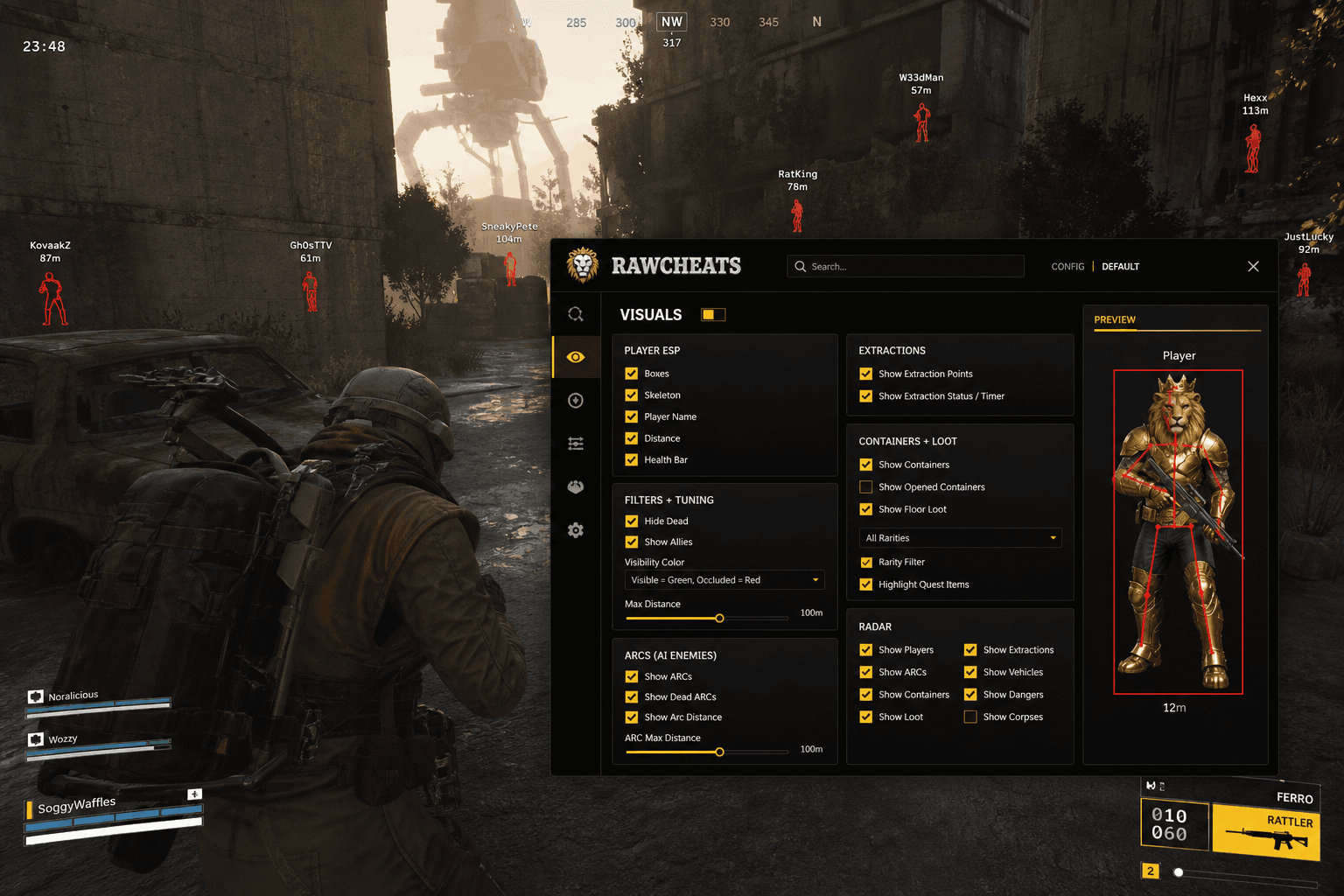
An Arc Raiders HWID ban propagates to every other EAC-protected game on the same hardware — Fortnite, Apex, Rust, DayZ all lost together. Here's how the spoofer breaks the cascade.
The most expensive cost of getting banned in Arc Raiders isn't losing your Arc Raiders account. It's losing every other EAC-protected game on your hardware in the same moment. Per Embark's Hardware Banning FAQ, an Arc Raiders HWID ban is explicitly non-appealable and cross-propagating — meaning the hardware fingerprint goes onto Epic's centralized ban list, and every other game running EAC's kernel scanner checks the same list at session start. Fortnite, Apex Legends, Rust, DayZ, Squad, Halo Infinite multiplayer, Dead by Daylight, dozens more. One ban, multiple games gone. Most Arc Raiders cheat-vendor copy doesn't warn you about this because it's bad for sales. We're calling it out because the spoofer math is structurally different from the math on a single-game ban.
This post is a cluster of the Arc Raiders Cheats Complete 2026 Guide pillar. The pillar covered the broader market context; this cluster goes deep on what EAC fingerprints, how the cross-EAC cascade actually works, and why running un-spoofed is structurally unwise on this specific game.
The mechanic — Epic's centralized HWID ban list
EAC has been Epic-owned since 2018. That means Epic operates a centralized hardware-identification service that every EAC-integrated game queries at session start. When EAC's kernel scanner confirms a cheat in Arc Raiders, the hardware composite hash gets written to Epic's ban list. Every other EAC game's session-start check sees the entry on the next launch. A hit blocks the session.
The composite hash isn't a single identifier — it's a fingerprint built from roughly 16 hardware identifier categories, combined and hashed in a way that produces a hardware-unique signature that's stable across reinstalls, account switches, and Windows reinstalls. Reformatting your drives doesn't change it. Reinstalling Windows doesn't change it. Switching Steam accounts doesn't change it. The only thing that changes it is modifying the underlying hardware identifiers, which is what a spoofer does at the driver level.
What EAC actually reads (the 16 identifier categories)
This list isn't speculative — it's compiled from reverse-engineering work in the public domain (notably adrianyy/EACReversing and security research from 0x90.sh and secret.club, summarized in our HWID Spoofer pillar). For Arc Raiders specifically, EAC reads:
- Motherboard serial (SMBIOS Type 2)
- System UUID (SMBIOS Type 1, the most uniquely identifying field)
- Chassis serial (SMBIOS Type 3)
- BIOS vendor + version + release date
- CPU info (CPUID brand string, vendor ID, processor signature)
- RAM module serials (SMBIOS Type 17, one entry per DIMM)
- GPU device serial / PCI device path (queried via DXGI / D3D)
- Storage device serials (NVMe / SATA — both system drive and any attached secondary drives)
- Monitor EDID (display panel serial / manufacturer / model)
- MAC addresses (every NIC including virtual ones)
- USB controller IDs and connected device serials (yes, including your peripherals)
- Sound device identifiers
- TPM endorsement key public component (if Secure Boot is enabled, which it often is for Arc Raiders compatibility)
- System manufacturer + model strings
- Disk volume serials (NTFS volume IDs)
- Hardware-rooted Windows install GUID (constructed from multiple identifiers, harder to change)
The composite hash is computed from all 16 categories combined. Spoofing fewer than all 16 leaves a recoverable identity trail — if your spoofer modifies 14 categories but leaves your TPM key and Windows install GUID untouched, the residual fingerprint from those two is enough for EAC to match against the ban list. The "fewer-categories spoofer" pattern is what gets people banned after they thought they were protected.
Raw Spoofer covers all 16 categories. This is the spec a working spoofer has to meet for Arc Raiders specifically because the cross-EAC cascade makes incomplete spoofing significantly more costly than on single-game contexts.
Why Arc Raiders amplifies the cross-EAC cascade risk
A few structural reasons the cascade matters more for Arc Raiders than for other EAC games:
The game is newer. Arc Raiders launched October 30, 2025. If you're a regular Arc Raiders player, you probably already played Fortnite, Apex, or Rust on the same PC for years before Arc Raiders existed. Your account history on those other games predates your Arc Raiders cheat usage. A cross-EAC ban takes out years of accumulated account value on games where you weren't even cheating.
One-strike permaban policy. Embark shifted from three-strike to one-strike permaban in late February 2026 (covered in the pillar and the ban wave history cluster). Your first detection in Arc Raiders is your last. Combined with the cross-EAC cascade, this means your first detection is also your last on every other EAC game.
Anybrain ML behavioral detection on top of EAC. Anybrain catches statistical anomalies that EAC's signature scanner misses (covered in the anti-cheat works cluster). Greedy aimbot tuning that would skate by on Fortnite for weeks gets flagged on Arc Raiders within days because Anybrain runs against you here in a way it doesn't run there.
Embark's manual appeal review is more thorough. Per Embark's Ban and Enforcement Policy, every ban appeal gets 100% human review. The manual process catches more legitimate cheating than automated triage does, which means appeal success rates on Arc Raiders are lower than on games with automated appeal systems. Don't count on the appeal as your safety net.
How the spoofer actually breaks the cascade
A working spoofer randomizes the 16 identifier categories at the driver level — meaning the kernel-mode hardware reads that EAC does return spoofed values rather than the actual hardware values. The composite hash EAC computes is built from the spoofed values, which produces a fingerprint that doesn't match your real hardware identity. When EAC checks the ban list against the new composite, there's no match. Clean session.
The randomization happens per-session, not once. This matters because if you ran a spoofer once and it set static fake values, EAC's behavioral analytics could correlate the static "fake" fingerprint across sessions and eventually re-link it to your real identity through other telemetry. Per-session randomization produces a different composite every time, breaking the longitudinal correlation.
Raw Spoofer implements per-session randomization across all 16 categories. The driver-level hook is what makes this work — userland spoofers that just modify registry entries or environment variables don't change what EAC actually reads, because EAC bypasses the OS API and queries the hardware directly through its kernel driver. Userland spoofing is theater; driver-level spoofing is real.
We covered the deeper technical details in the HWID Spoofer pillar; for Arc Raiders specifically the takeaways are: cover all 16 categories, randomize per-session, and run the spoofer at the driver level rather than userland.
Workflow — running Raw Spoofer with Arc Raiders correctly
The exact session workflow:
-
Cold-boot Windows. Don't run Arc Raiders or any EAC game in the same Windows session you intend to cheat in until the spoofer has run. Boot fresh.
-
Run Raw Spoofer as administrator. Enter your spoofer license. The spoofer loads its kernel driver and applies randomized hardware identifiers across all 16 categories. The output console confirms each category's randomization.
-
Verify the spoofer is active. Run a hardware-info tool (any free CPUID viewer works) and confirm the displayed values don't match your actual hardware. If they match, the spoofer didn't load correctly — restart and try again.
-
Launch Raw Arc Raiders loader. Enter cheat license. Select Arc Raiders. The loader does its own pre-injection sanity check against the spoofer state.
-
Launch Arc Raiders via Steam. EAC starts and reads the spoofed hardware identifiers as if they were your actual hardware. The composite hash it computes doesn't match the ban list.
-
Inject the cheat at main menu. Standard injection flow — INSERT keybind opens the menu.
-
Play. End of session, exit Arc Raiders, exit the spoofer. The next session starts fresh with new randomized identifiers.
Don't skip the cold boot. Running the spoofer in a Windows session where Arc Raiders has already launched once won't help — EAC may have already cached your real fingerprint. Cold boot is non-optional.
Don't run un-spoofed sessions on the same hardware. Even a single un-spoofed Arc Raiders session writes your real fingerprint to Epic's session logs. If you get flagged on a later session, the historical real-fingerprint logs let Epic re-link the ban to your actual hardware identity.
Recovering from a cross-EAC ban that already happened
If you've already eaten a ban and you're reading this looking for recovery options:
The HWID ban itself can't be appealed. Per Embark's Hardware Banning FAQ, hardware bans are explicitly non-appealable. The manual review process applies to account bans, not HWID bans.
The spoofer breaks the link. A working spoofer with per-session randomization across all 16 categories produces a hardware composite that doesn't match the ban list. A new Steam / Embark account on the same hardware behind a working spoofer reads as a clean identity to EAC. Get Raw Spoofer before your next session.
Account separation matters. Don't reuse the email, phone number, Steam account, or payment method from your banned identity. The hardware fingerprint is what EAC reads, but Steam / Embark also do account-level pattern matching across email reuse, payment fingerprints, and IP address patterns. We covered the full recovery workflow in the recovering from a hardware ban cluster — 11 steps, none of them skippable.
Don't keep playing un-spoofed. This is the trap that catches people who got their original ban and then keep cheating on the same hardware without protection. Every un-spoofed session adds to the historical fingerprint log, making the eventual cleanup harder. Spoofer first, then session.
What about the new Layer 4 kernel AC announced May 2026?
Embark's May 7, 2026 Ensuring Fair Play dev blog announced a new kernel-level anti-cheat in active testing alongside EAC. The vendor isn't named, deployment timeline isn't confirmed, and the technical scope isn't specified. The honest position: any vendor claiming Layer 4 immunity ahead of deployment is overpromising.
What we can say is that the spoofer architecture is designed around continuously evolving anti-detection infrastructure. The 16-category coverage isn't tied to a specific anti-cheat's reads — it covers the full hardware-identifier surface that any reasonable kernel AC would query. When Layer 4 ships, the spoofer will be updated as needed within the standard 6-12 hour SLA we run on all our products.
The structural insight is that hardware fingerprinting is a known technique with a finite number of identifier categories. A spoofer that covers all 16 categories is broadly defensive against any AC that reads from the same identifier set. Layer 4 will use the same categories EAC does (they're architecturally constrained to read what Windows and the hardware expose); the spoofer's coverage doesn't need to be reinvented for each new AC.
Frequently asked questions
Will the spoofer affect my other games (Steam, Epic Games Store, etc)? The spoofer is active only when you choose to run it. If you're not running it, your hardware reads its actual identifiers. You can run the spoofer for a cheating session and exit it afterward to return to normal hardware identity for legit play. Don't run legit games during a spoofed session — Steam, Epic, etc. may log the spoofed identity, which produces account-pattern anomalies on the legit side.
Can the spoofer be detected as a separate kernel driver? The spoofer's driver is signed and loaded through Microsoft's normal driver-loading pipeline. It doesn't appear as a "cheat" because it's not a cheat — it's a hardware-identification manager. EAC's driver-image scanner sees it as a generic signed driver. The architectural design is to be transparent at the driver-list level while modifying the hardware-read pipeline.
Do I need the spoofer if I use a VPN? A VPN changes your IP address. It doesn't change anything else. EAC reads hardware identifiers, not IP-level data, for the HWID ban list. VPNs don't help with HWID bans at all. The spoofer is for HWID; the VPN is for IP-level account protection. Both serve different purposes.
What if I just swap my motherboard? Hardware swaps work for a specific subset of identifiers but don't break the full composite. The TPM endorsement key migrates if you keep your TPM module. The Windows install GUID is derived from multiple identifiers, not just the motherboard. The storage drive serials persist if you keep the drives. A full hardware swap (mobo + CPU + GPU + RAM + drives + monitor + keyboard + mouse) would work but costs more than years of spoofer subscription. The spoofer is the economically sane option.
Is the cross-EAC cascade actually enforced or is it theoretical? It's enforced. Embark's Hardware Banning FAQ explicitly confirms that Arc Raiders HWID bans affect all EAC-protected games on the same hardware. Multiple community reports confirm the cascade in practice — users have reported losing Fortnite and Apex accounts after Arc Raiders bans.
How long does the spoofer randomization persist within a session? The spoofer applies randomized identifiers once at session start and they persist until the spoofer exits. The randomization isn't per-frame or per-second — it's per-session. New session = new randomization.
Can I use the spoofer on Steam Deck or Linux? No. Raw Spoofer is Windows-only. The driver is signed for Windows kernel-mode and the SMBIOS / TPM read paths it hooks are Windows-specific. Steam Deck / Linux users don't have a viable spoofer option from us.
What's the relationship between Raw Spoofer and Raw Arc Raiders? They're separate products that work together. Raw Arc Raiders is the cheat (aimbot, ESP, etc). Raw Spoofer is the hardware identity layer. You need both for Arc Raiders specifically because the cross-EAC cascade makes incomplete protection structurally expensive. Most users buy them as a bundle.
Ready to play Arc Raiders without the cross-EAC ban cascade risk? Raw Spoofer covers all 16 identifier categories with per-session randomization. Pair with Raw Arc Raiders for the full setup. For the broader context, see the HWID Spoofer pillar and the Arc Raiders Cheats pillar.