
Free Marvel Rivals Cheats — Why They Get Detected (and Steal Your Wallet)
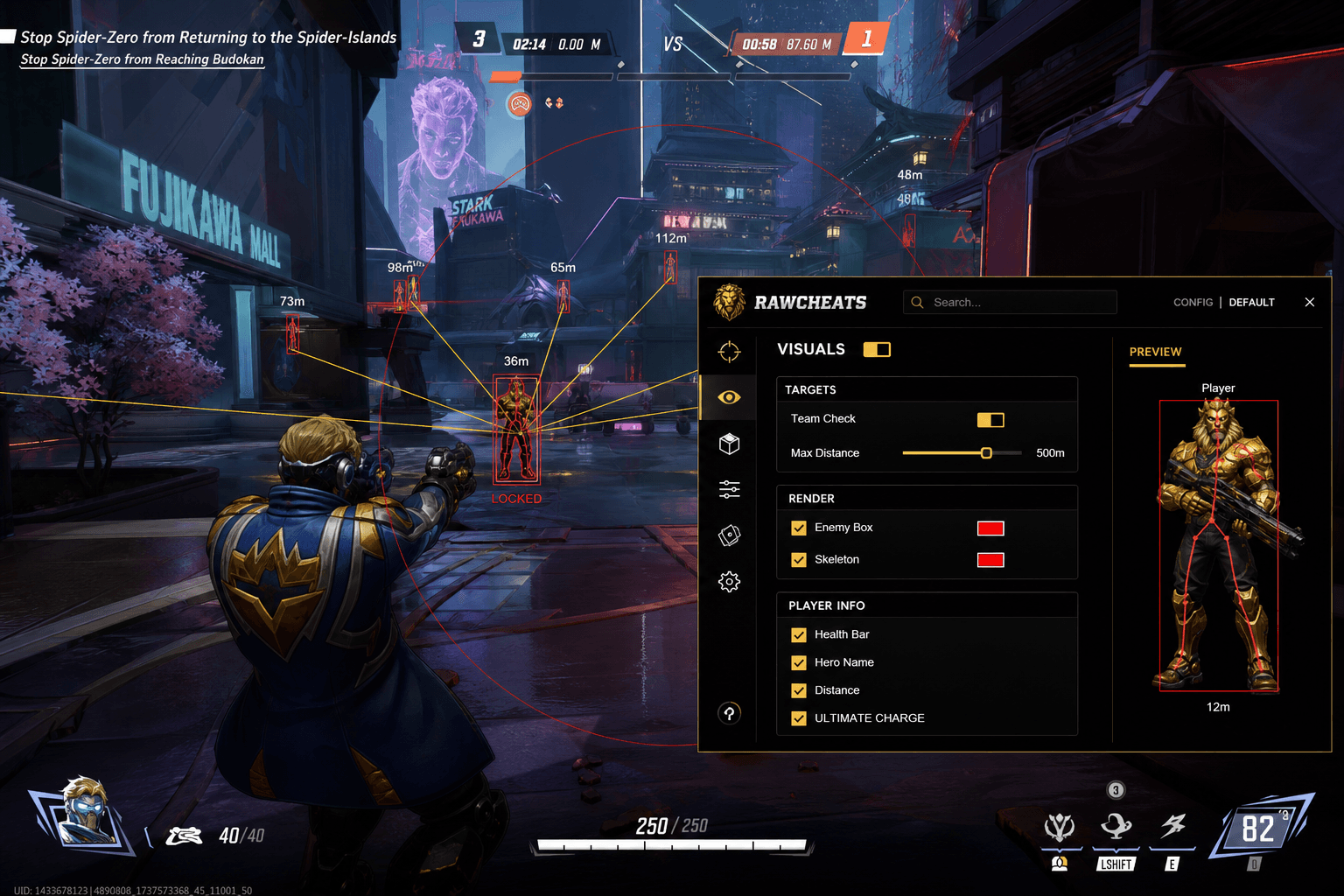
Discord-distributed "Free Marvel Rivals cheats" are Lumma / Vidar 2.0 / StealC payloads. The 4-hour-from-download-to-banned pattern. Younger demographics hit hardest.
The Discord server is called something like "Free Marvel Rivals 2026" and has 8,400 members. The pinned message links a Mediafire archive. The archive contains an installer labeled "MarvelRivalsCheat_v2.7.exe." You run it, click through the SmartScreen warning, and the installer reports "Cheat injected successfully." You launch Marvel Rivals. Within 90 minutes your Steam account is logged in from Russia, your Discord token is being used to spam similar Discord servers, and your browser-saved Coinbase password has been used to drain your wallet to a freshly-generated address. The "cheat" never worked — but the Vidar 2.0 infostealer it bundled did exactly what it was built to do.
This post is a cluster of the Marvel Rivals Cheats Complete 2026 Guide pillar. The pillar gave you the headline warning. This piece is the in-depth breakdown — what the actual payload does, why Marvel Rivals' player demographic is hit harder than other games, the four-hour detection-and-ban pattern on the rare cases where the cheat actually runs, and why the free-cheat economy is essentially synonymous with the credential-theft economy.
What "free Marvel Rivals cheat" actually means in 2026
Two scenarios, broadly. Both are bad.
Scenario A: The "cheat" is pure malware with no game-side functionality. This is ~80% of free-Marvel-Rivals-cheat distribution. The binary you download contains an infostealer (Lumma, Vidar 2.0, StealC, RedLine, MetaStealer, or one of several other commodity stealers) and possibly a coin miner or a remote-access trojan. The "cheat" doesn't read game memory, doesn't inject anything into Marvel Rivals, doesn't do anything to your game session. It steals your credentials, possibly persists for later additional payloads, and that's it. The fake "Cheat injected" status message you see is a Windows MessageBox showing fake success.
Scenario B: The "cheat" works for ~4 hours before NeacSafe catches it. This is ~20% of free-cheat distribution. The binary is a real cheat (often a recycled paid build that got dumped to the public after detection) plus an infostealer rider. The cheat actually does aim assist or ESP for a few sessions, and then NeacSafe's continuous detection model catches it. Your account eats a HWID ban; your hardware fingerprint goes into the cross-NetEase ban table; you lose Marvel Rivals + Naraka + Identity V + Once Human on the same hardware (see the HWID spoofer cluster for the cross-NetEase ban architecture). And separately, the infostealer rider already exfiltrated your credentials.
Neither scenario has a positive outcome. The first scenario costs you your credentials. The second costs you credentials + your hardware fingerprint + the entire NetEase portfolio.
The infostealer payload — what's actually running
Modern commodity infostealers are sophisticated commercial products sold on dark-web markets to spam-and-credential-theft operators. They are not amateur "viruses." Brief survey of the major payloads found in 2026 free-Marvel-Rivals-cheat distributions:
Lumma Stealer. Sold as Malware-as-a-Service. Steals browser passwords (Chrome / Edge / Firefox / Opera saved logins), browser cookies (session tokens), browser autofill data (credit card numbers, addresses), crypto wallet files (Electrum, Exodus, MetaMask extension data, Trust Wallet, Atomic), Steam configuration files, Discord tokens, Telegram session data, FTP client credentials. The exfiltration target is a Lumma operator's C2 server; data is sold in bulk on aggregator sites.
Vidar 2.0. Per the Acronis TRU writeup, Vidar 2.0 is the 2025-2026 refresh of an older stealer family. Same credential targets as Lumma plus screenshot capture, additional crypto-wallet support, and improved evasion of consumer antivirus. Specifically distributed via fake game-cheat archives on GitHub, Reddit, Discord, and Mediafire — the writeup explicitly names game-cheat distribution as the primary vector.
StealC. Newer stealer family. Similar credential targets, lower-priced on dark-web markets, used by smaller operators. Sometimes seen alongside Lumma in the same archive (operators run multiple stealers to maximize per-victim coverage).
RedLine. Older stealer family but still active. Notable for stealing VPN client credentials and gaming-platform credentials (Steam, Epic, Origin, Battle.net). Sometimes packaged with a crypto miner.
The economics: each infected machine produces $5-$50 in credential-resale value depending on what was on it. A free-cheat distributor doesn't care if the cheat works; they care about the conversion rate from "downloaded" to "credentials exfiltrated."
The credential exfiltration timeline
Within roughly 30-60 seconds of running the infected installer, the stealer:
- Enumerates installed browsers
- Reads each browser's encrypted credential store
- Decrypts saved passwords using the browser's local DPAPI key
- Reads session cookies (which provide logged-in access without password)
- Reads browser autofill data
- Enumerates crypto wallet directories
- Reads Discord local data (token + user info)
- Reads Steam configuration files
- Reads Telegram session
- Optionally takes screenshots
- Bundles everything into an archive
- Exfiltrates the archive to the operator's C2 server
The whole process takes 30-90 seconds. If you have a typical browser-saved password store (50+ saved logins), DPAPI is doing the decryption work in the background while you're still clicking through SmartScreen warnings. By the time you're queuing into Marvel Rivals, your credential store is already on a server in some operator's pipeline.
The next steps happen on the operator side. Steam tokens get logged in from foreign IPs and Steam inventory items (CS2 skins, TF2 hats, Marvel Rivals cosmetics where tradeable) get sold off. Crypto wallet keys get used to sweep balances to operator-controlled addresses. Browser saved Coinbase / Binance passwords get used to drain exchange accounts. Discord tokens get used to spam similar "free cheat" links to your friends.
You typically notice within 1-4 hours when the Steam alert email arrives, by which point the inventory's gone.
Why younger demographics get hit harder on Marvel Rivals specifically
Marvel Rivals' player base skews younger than the average kernel-AC FPS. Survey data isn't public but anecdotal-plus-Discord-server-demographics suggests a meaningful concentration of players in the 14-21 range. Compare to Rust (older average, deeper kernel-AC familiarity) or Fortnite (broader age distribution).
Younger users are more likely to:
- Save passwords in their browser (less likely to use a password manager)
- Have Discord credentials saved in the browser session
- Use the same password across multiple accounts
- Not have hardware-2FA on crypto wallets
- Use Discord as their primary social platform (more session tokens)
- Have crypto wallets with browser extensions rather than hardware wallets
The expected credential-loss per Vidar 2.0 infection on a Marvel Rivals "free cheat" buyer is higher than the equivalent on a Rust free-cheat buyer because the credential surface is less defended. The dark-web buyer-side pricing for Marvel Rivals demographic credential dumps is correspondingly higher than for Rust demographic dumps.
This isn't accidental — infostealer operators target distribution channels by demographic match. The Discord servers distributing free Marvel Rivals cheats are deliberately aimed at the demographic least likely to have layered defenses.
The 4-hour detection-to-ban pattern
For the ~20% of free Marvel Rivals cheats that actually run on the game (Scenario B from the top), the detection timeline is observable. Standard pattern from Steam community discussion threads:
- T+0: Download the archive, run the installer, infostealer runs (you don't notice).
- T+5min: "Cheat injected" success message. Launch Marvel Rivals.
- T+15min: Cheat features visible (aim assist, ESP). First match begins.
- T+45min: NeacSafe's behavioral telemetry has accumulated enough anomalous data — high headshot rate, statistical aim patterns inconsistent with the player's prior history.
- T+90min: Manual review pipeline picks up the flag. Cheat-side memory pattern is sampled.
- T+3-4hrs: Detection fires. Mid-match termination or end-of-match ban. Hardware fingerprint goes into the shared ban table.
By the time the ban hits, the credential theft has been done for 3.5 hours. The Steam Inventory's been sold. The crypto wallet's been swept.
The community discussion threads document the pattern in detail. Search Steam community posts for "Marvel Rivals banned after 4 hours" and you'll find dozens of threads.
The Discord server distribution mechanic
Two parts. The first is generation, the second is propagation.
Generation. A small number of operators create "free cheat" Discord servers, posting links and instructions. The servers look legitimate — 5K+ members, regular "updated" messages, screenshots showing supposed in-game cheat usage. The screenshots are stock or borrowed from paid cheats. The "updates" are repeated re-posts of the same archive with a new filename.
Propagation. Once a victim runs the cheat, the infostealer steals their Discord token. The operator uses the stolen token to post the "free cheat" link in every server the victim was a member of — gaming communities, school servers, friend groups. This creates organic-looking propagation: a kid you know from school posts about a working cheat, you trust them, you download it. You now propagate it from your token after infection.
This is why the free-cheat distribution flywheel runs continuously despite Discord's anti-spam tooling. The propagation doesn't come from operator accounts that Discord can identify and ban — it comes from real victim accounts that Discord can't easily distinguish from legitimate behavior until enough reports accumulate.
Don't join the servers. The Discord token exfiltration starts the moment your token is in their database, even if you haven't downloaded the cheat yet. The lower-friction theft is the Discord token itself, which gives the operator hijack access to your account. Joining the server is the wrong move even if you don't run the binary.
GitHub repos — the slightly different distribution channel
GitHub repos labeled "Marvel Rivals Cheat 2026" or "Free Marvel Rivals Aimbot" or similar are heavily SEO-indexed and rank for free-cheat search queries. The repos typically contain:
- A polished README with screenshots
- A
releases/directory with the malware binary - A few fake
.csor.cppsource files that look like real code (often AI-generated source with random aimbot-flavored variable names) - A LICENSE file (suggesting legitimacy)
The GitHub Actions CI on these repos is sometimes configured to auto-update the release binary with a fresh infostealer build daily, defeating signature-based AV detection.
GitHub takes these repos down when reported, but takedown is reactive — repos go up, run for a few weeks accumulating downloads, get taken down, get re-created on a fresh account. The Acronis TRU writeup specifically calls out GitHub as a Vidar 2.0 distribution channel.
If you've been searching GitHub for "Marvel Rivals cheat," every result is malware. There are no exceptions. Real cheat developers don't publish on GitHub for obvious reasons — both because of the legal exposure and because public source defeats the closed-source bypass-engineering moat that protects detection windows.
What about open-source aimbot frameworks?
Adjacent question. There are open-source FPS aimbot frameworks (general game-cheat-development tools, not Marvel Rivals-specific) on GitHub published by security-research-oriented developers. These tend to be educational / proof-of-concept code, not weaponized for a specific game.
Building a Marvel Rivals cheat from open-source aimbot framework is technically possible if you have the offsets, kernel-driver experience, and bypass capability. It's also unrealistic — the offset reverse-engineering work alone takes hundreds of hours, the kernel-driver bypass work takes more, and NeacSafe's VMProtect-packed driver makes the static analysis harder than for EAC.
For 99.9% of buyers, "build it yourself from GitHub" is not actually an option. The framing exists in cheap-cheat marketing to legitimize "free cheats from GitHub" but the actual binaries distributed are not the same as the open-source frameworks.
The paid-cheat economic argument
Free Marvel Rivals cheats don't work AND they steal your stuff. Paid Marvel Rivals cheats work AND don't steal your stuff. The expected-value comparison is one-sided.
A paid cheat subscription at $25/week (typical Raw Rivals / niche-standard tier) over a year is $1,300. A single Vidar 2.0 infection on a typical Marvel Rivals demographic profile loses ~$200-$2,000 in credentials immediately, plus the cost of replacing the banned hardware fingerprint if you eventually want to play NetEase games again ($500-$5,000 in hardware), plus the cost of rebuilding compromised accounts.
The expected-loss math against a Vidar infection favors paid by orders of magnitude. This isn't us selling — this is just the math. Free cheats lose you more than paid cheats cost, on average, in expected value.
This applies even if you "only" use the cheat once. The Vidar infection doesn't care that you didn't subscribe long-term; it ran and exfiltrated credentials on download. The one-time "try it" download produces the same expected loss as the every-day-for-a-month use case, because the credential-theft cost is fixed per infection.
"But this guy on Reddit said his free cheat worked"
The Reddit post or YouTube video showing a free cheat working can be one of:
- An operator promoting their distribution (using a clean test environment to record the demo)
- A real user in their first 3-4 hours before detection lands (real cheat, real footage, banned shortly after)
- A user who got Scenario B (cheat genuinely runs) and hasn't yet noticed their credentials were drained
- An influencer paid to promote a free-cheat distribution channel for the credential-conversion revenue
None of these scenarios mean a free Marvel Rivals cheat is safe for you. The video of someone using a free cheat doesn't tell you whether their Steam account was drained 30 seconds before the recording started.
What we recommend
If you want to use Marvel Rivals cheats, use a paid product from a vendor that names NeacSafe correctly and warns about cross-NetEase HWID risk. Raw Rivals passes both tests; the comparison cluster covers other vendors.
If $5/day for a daily cheat tier is too expensive, the cheat-buying decision isn't right for your budget — and the alternative isn't "free cheat with no downside," it's "don't cheat in Marvel Rivals." Free is never the answer in this space.
If you've already downloaded and run a free Marvel Rivals cheat, assume your credentials are compromised. Immediately: change passwords on Steam / Discord / banks / crypto exchanges (from a different, clean device); rotate any saved-in-browser credentials; check Steam Inventory for unauthorized trades; scan for the infostealer with Malwarebytes or similar (consumer AV often misses commodity stealers; specialized scanners do better).
The pillar Marvel Rivals Cheats Complete 2026 Guide covers the broader buyer-facing context. The HWID spoofer cluster covers why a real spoofer matters once you commit to a paid setup. The setup safety cluster walks through the pre-flight workflow.